

Best Elbow Brace for Tennis Players: Complete 2026 Buying Guide
If your elbow aches every time you hit a backhand, you already know why so many players go searching for the best elbow brace for tennis players. Tennis elbow (lateral epicondylitis) is one of the most common overuse injuries in racquet sports, and the right brace can be the difference between playing through pain and playing pain-free. In this guide, we break down exactly what makes the best elbow brace for tennis players, compare top-rated options by brand and model, and help you pick the right fit, size, and style for your game.
How We Chose the Best Elbow Brace for Tennis Players
Not every brace marketed for tennis elbow is actually built for tennis players. To narrow down the best elbow brace for tennis players, we looked at compression technology, real player reviews, how each product held up during actual match play, and whether the design allowed for a full, unrestricted swing. Braces that slipped during play, restricted grip strength, or lacked adjustable compression were ruled out early, since a genuinely useful best elbow brace for tennis players needs to perform under real on-court conditions, not just look good in a product photo.
Why Tennis Players Need a Dedicated Elbow Brace
Tennis elbow develops when repetitive wrist extension and gripping motions — the kind you do on every forehand, backhand, and serve — cause micro-tears in the tendons attached to the outside of the elbow (the lateral epicondyle). Unlike a generic sleeve, the best elbow brace for tennis players is designed specifically to reduce strain on this tendon during the exact motions that cause the injury in the first place.
A well-designed tennis elbow brace works in one of two ways:
- Counterforce compression — a strap positioned just below the elbow joint that redistributes tension away from the damaged tendon
- Full compression sleeves — that wrap the entire forearm and elbow to improve circulation, reduce swelling, and provide proprioceptive support during play
Choosing between these two styles is the first step in finding the best elbow brace for tennis players for your specific symptoms and playing style, and it’s a decision worth taking seriously since the best elbow brace for tennis players you pick now can shape how quickly your elbow recovers.

What Makes a Great Tennis Elbow Brace
Before comparing products, it helps to know what separates the best elbow brace for tennis players from a mediocre one. Look for:
- Adjustable compression — a strap or dial system so you can fine-tune pressure during a match
- Breathable, moisture-wicking material — neoprene or knitted fabric that won’t slip when you sweat
- Anatomical gel pad or pressure pad — positioned directly over the extensor tendon
- Secure, non-slip fit — silicone grip lining prevents the brace from sliding down during play
- Lightweight, low-profile design — shouldn’t restrict your swing mechanics or racquet grip
Signs You Need the Best Elbow Brace for Tennis Players
Not sure if it’s time to start shopping? These are the most common early warning signs that it’s time to look for the best elbow brace for tennis players rather than pushing through the pain:
- Sharp or aching pain on the outside of the elbow after backhands or serves
- Weak grip strength when shaking hands or lifting your racquet bag
- Pain that worsens with repeated play but eases with rest
- Tenderness when pressing directly on the bony bump outside the elbow
- Discomfort that lingers into the next day after a match
If two or more of these sound familiar, it’s a strong signal that adding the best elbow brace for tennis players to your gear bag now — rather than after the pain becomes chronic — will save you weeks of recovery time later.
Top-Rated Elbow Braces for Tennis Players (2026 Comparison)
Here’s how the leading options stack up. Each of these has a strong claim to being the best elbow brace for tennis players, depending on your symptoms and budget.
| Brand & Model | Type | Compression Pad | Best For | Price Range |
|---|---|---|---|---|
| Bauerfeind EpiTrain | Full compression sleeve | Anatomically knit pad | Chronic tennis elbow with swelling | $$$ |
| Mueller Hg80 Tennis Elbow Support | Counterforce strap | Gel pad | In-match pain during active play | $ |
| Cho-Pat Tennis Elbow Support | Counterforce strap | Air cell pad | Budget-friendly daily wear | $ |
| McDavid Elbow Strap | Counterforce strap | Foam pad | Lightweight, minimal-bulk players | $ |
| POWER LIX Tennis Elbow Brace | Dual strap sleeve | Dual compression pads | Players wanting sleeve + strap combo | $$ |
| Rehband Elbow Sleeve | Full compression sleeve | Neoprene panel | Cold-weather or early-morning matches | $$ |
Among these, the Bauerfeind EpiTrain and the Mueller Hg80 are consistently rated the best elbow brace for tennis players dealing with moderate to severe tennis elbow, while the Cho-Pat and McDavid options are excellent entry points for players who need occasional support.


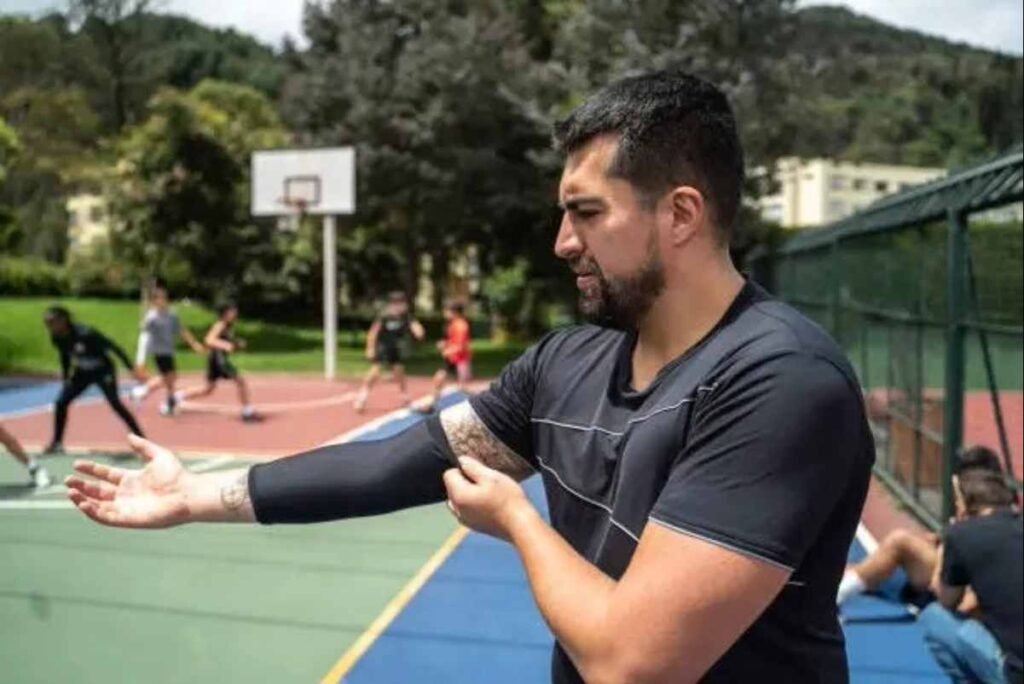

Pros and Cons of Each Style
Many players ask us directly whether a strap or a sleeve makes for the best elbow brace for tennis players, and honestly, the answer comes down to how you use your arm on court.
Counterforce Straps (Mueller, Cho-Pat, McDavid)
Pros:
- Targeted pressure directly on the tendon
- Low-profile, doesn’t interfere with grip or swing
- Easy to put on and adjust mid-match
Cons:
- Less overall forearm support than a full sleeve
- Can dig in if over-tightened
- Doesn’t address wrist involvement
Full Compression Sleeves (Bauerfeind, Rehband, POWER LIX)
Pros:
- Covers the entire forearm for broader support
- Improves circulation and reduces post-match swelling
- Often doubles as recovery wear off the court
Cons:
- Bulkier fit, some players notice it during serves
- Can feel warm in summer conditions
- Typically more expensive
Weighing these trade-offs is essential to finding the best elbow brace for tennis players for your own game, since the “best” option really depends on whether your priority is in-match performance or all-day recovery support.
How to Size Your Elbow Brace Correctly
An ill-fitting brace won’t deliver the benefits of the best elbow brace for tennis players, no matter how good the product is. Follow these steps:
- Measure your forearm circumference — wrap a soft tape measure around the widest part of your forearm, about 2 inches below the elbow
- Check the brand’s specific size chart — sizing varies significantly between Bauerfeind, Mueller, and McDavid
- For counterforce straps, measure directly around the forearm at the point of maximum muscle bulge (not at the elbow joint itself)
- When between sizes, size up for sleeves and size down for straps, since straps rely on tighter, targeted compression
| Forearm Circumference | Typical Size |
|---|---|
| Under 8 inches | Small |
| 8–10 inches | Medium |
| 10–12 inches | Large |
| 12+ inches | X-Large |
Getting this right the first time saves you from returns and ensures your brace performs the way the best elbow brace for tennis players is supposed to during actual play.
New vs. Used: Should You Buy a Second-Hand Brace?
Unlike mobility equipment, elbow braces are inexpensive enough that buying used rarely makes sense. Compression materials degrade with wash cycles and sweat exposure, and a stretched-out brace won’t deliver consistent pressure. For anyone serious about finding the best elbow brace for tennis players, a new brace is the only way to guarantee full compression integrity and hygiene.
Tips for Getting the Most Out of the Best Elbow Brace for Tennis Players
- Wear it before you feel pain, not after — preventive use reduces flare-ups
- Don’t over-tighten — you should be able to slide two fingers under the strap
- Pair it with forearm-strengthening exercises during the off-season
- Remove it during extended rest breaks to let circulation normalize
- Replace it every 6–12 months with regular play, as elastic support degrades over time
Following these habits is what actually separates players who get lasting relief from the best elbow brace for tennis players and those who buy one, wear it twice, and toss it in a bag.
Common Mistakes When Buying a Tennis Elbow Brace
Even players who know they need support often end up with the wrong product. Avoid these mistakes when shopping for the best elbow brace for tennis players:
- Buying based on price alone — the cheapest strap on the shelf rarely has an adjustable pad, and the best elbow brace for tennis players almost always includes some form of targeted compression adjustment
- Ignoring the size chart — every brand sizes differently, and a brace that’s technically the “best elbow brace for tennis players” on paper won’t help if it’s the wrong fit for your forearm
- Only wearing it after pain starts — preventive use is far more effective than reactive use
- Choosing a sleeve when you need targeted pressure (or vice versa) — match the style to your actual symptoms, not just what’s popular
- Skipping strengthening exercises — a brace manages symptoms, but forearm and grip-strengthening work is what actually reduces long-term risk
Frequently Asked Questions
Does an elbow brace actually help tennis elbow? Yes. Clinical evidence supports counterforce bracing as an effective way to reduce tendon strain and pain during activity, which is exactly why the best elbow brace for tennis players is built around this principle.
Should I wear my tennis elbow brace during matches or only during practice? Both. Most players find the most value wearing the best elbow brace for tennis players anytime they’re hitting balls, since the repetitive motion that causes tennis elbow happens in matches and practice alike.
How much should I expect to spend on a good tennis elbow brace? Prices typically range from $10 for a basic counterforce strap to $50+ for a premium compression sleeve. The best elbow brace for tennis players doesn’t have to be the most expensive one — it just needs to match your specific symptoms and fit correctly.
Is the best elbow brace for tennis players different from a regular tennis elbow brace sold in pharmacies? Often, yes. Pharmacy braces tend to be one-size-fits-all with basic compression, while the best elbow brace for tennis players is typically designed with sport-specific features like non-slip grip lining and adjustable pressure pads built for repetitive swinging motion.
Can a tennis elbow brace also help with golfer’s elbow? Counterforce straps designed for tennis elbow can often help with golfer’s elbow (medial epicondylitis) too, though the pad placement may need slight adjustment since golfer’s elbow affects the inside of the elbow.
How tight should a tennis elbow brace be? Snug enough that it doesn’t shift during play, but loose enough to fit two fingers underneath. Too tight can restrict circulation and actually worsen symptoms.
Is a compression sleeve or a strap better for tennis elbow? It depends on severity. Straps offer more targeted pressure for active pain management, while sleeves offer broader support and are often preferred for recovery days or chronic cases.
Ultimately, choosing the best elbow brace for tennis players is a personal decision that should factor in your symptom severity, playing frequency, and comfort preferences during a swing.
Final Verdict
For most players dealing with tennis elbow, the best elbow brace for tennis players is one that matches your specific symptoms: a counterforce strap like the Mueller Hg80 for in-match pain relief, or a full compression sleeve like the Bauerfeind EpiTrain for chronic support and recovery. Whichever style you choose, correct sizing and consistent use make the biggest difference in getting back on the court pain-free.


3 Comments